
Exploring Inverter Types in Pakistan: A Comprehensive Guide
In Pakistan, where power outages are a common occurrence, inverters play a crucial role in ensuring uninterrupted access to electricity. Inverters convert direct current (DC) from batteries or solar panels into alternating current (AC) that can power household appliances. There are several types of inverters available in Pakistan, each catering to different needs and preferences.
Inverter Type
Description
Pros
Cons
On-Grid Inverter
Independent of the utility grid, used in remote areas or for backup power.
Off-Grid Inverter
Connects to the utility grid and feeds excess power back into it.
Hybrid Inverter
Combines features of on-grid and off-grid inverters.
Micro Inverter
Installed on each solar panel, converts DC to AC individually.
Central Inverters
Used in utility-scale PV systems with a large number of solar panels.
Can reduce electricity bills through net metering
Environmentally friendly
Provides power during outages
Works well with solar panels and batteries
Can use solar power, battery storage, and grid power simultaneously
Enables
energy independence
Maximizes energy production
Enhanced monitoring and fault detection
High efficiency due to economies of scale.
Advanced monitoring and control capabilities.
Suitable for large, commercial, and utility-scale installations.
Does not work during power outages
Complex installation and regulatory requirements
Requires battery maintenance
Initial setup costs can be high
Complex installation
Higher initial investment
Higher upfront cost
Complex installation and maintenance.
Expensive for small-scale systems.
Vulnerable to single-point failures in large systems.
Choosing the Right Inverter
Selecting the right inverter for your needs in Pakistan depends on various factors such as your power requirements, budget, and the presence of solar panels or battery backup. Here are some considerations to help you make an informed choice:
Load Requirements: Determine the total wattage of the appliances you want to run during power outages to ensure the inverter’s capacity meets your needs.
Budget: Pure sine wave and hybrid inverters tend to be more expensive but offer better performance and compatibility. Consider your budget while making a decision.
Battery Backup: If you plan to use batteries for backup power, ensure the inverter is compatible and efficient with battery charging and discharging.
Solar Integration: If you have or plan to install solar panels, choose an inverter optimized for solar applications, such as a solar inverter or a hybrid inverter with MPPT capabilities.
Regulations: Check local regulations and utility company requirements for grid-tie systems to ensure compliance.
Professional Installation: Always hire a certified technician for the installation of your chosen inverter type, as improper installation can lead to safety hazards and reduced efficiency.
In conclusion, the choice of inverter type in Pakistan depends on your specific needs and circumstances. Understanding the different types and their pros and cons is essential for making an informed decision that ensures reliable and uninterrupted power supply.
Our Inverters Brands:
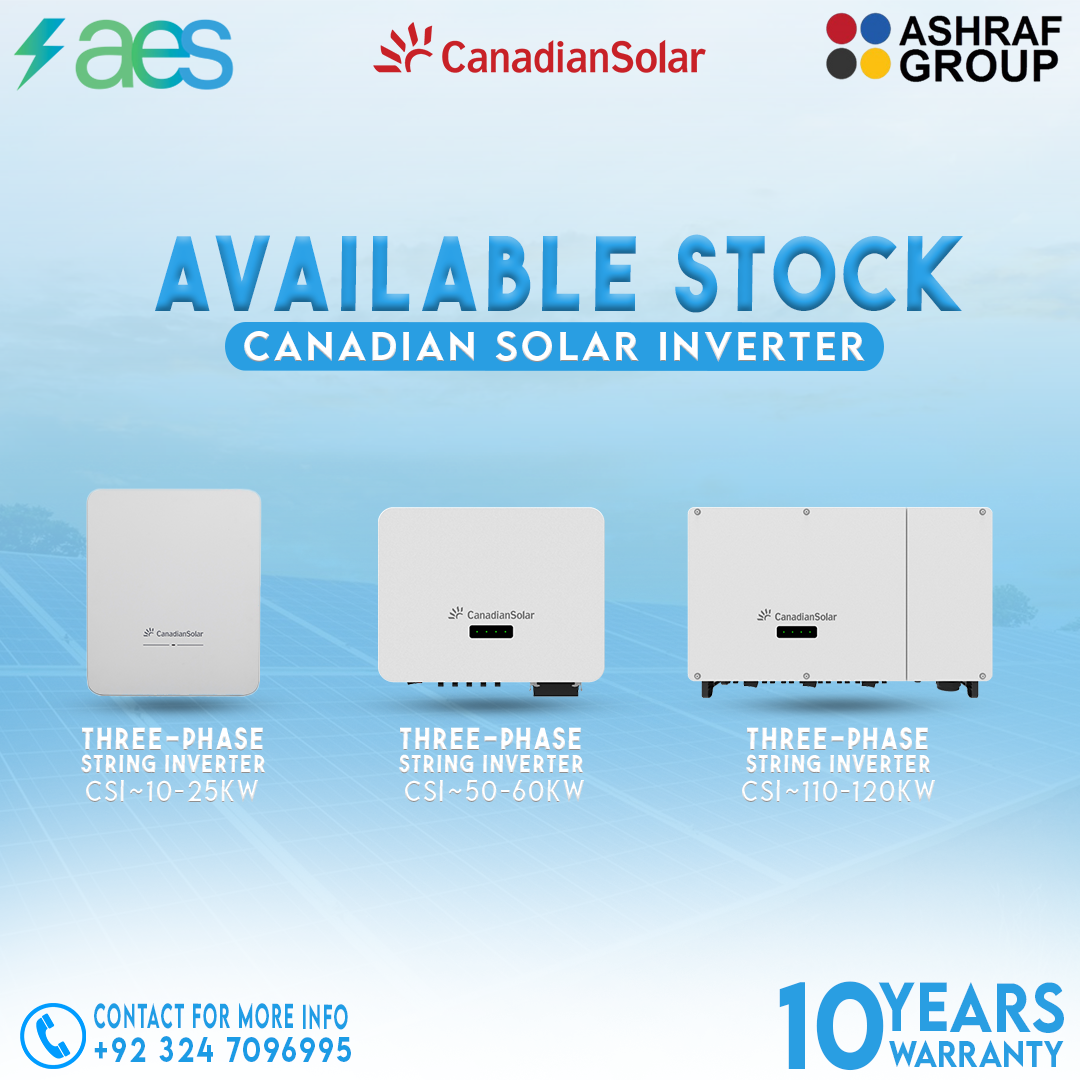
Canadian Solar
Brand
Types
Features
On-Grid & Hybrid Inverters
High-efficiency hybrid and on-grid inverters with advanced MPPT technology and smart monitoring support.
ATESS
Hybrid & Off-Grid Inverters
Reliable and budget-friendly hybrid inverters with pure sine wave output and smart protection features.
BYD ENERGY STORAGE
Hybrid Inverters
Advanced hybrid inverters designed for seamless integration with energy storage systems. Delivering high efficiency, intelligent battery management, and reliable backup power for residential and commercial applications.
Inverter Type
Description
Pros
Cons
Inverter Type
Description
Pros
Cons
Inverter Type
Description
Pros
Cons
Inverter Type
Description
Pros
Cons
Contact us
Head Office
SE 9R 60, 1st floor Nishter Road, Opp Govt. School, Kissan Street, Brandreth Road, Lahore, Pakistan
Phone Inquiry
+92 324 7096995
Send Email
aespakistan00@gmail.com